Home › Security courses › Conflict Management
Security · On site
Conflict Management
Face-to-face conflict management for front-line staff who deal with the public when things get heated.
1 dayOn site
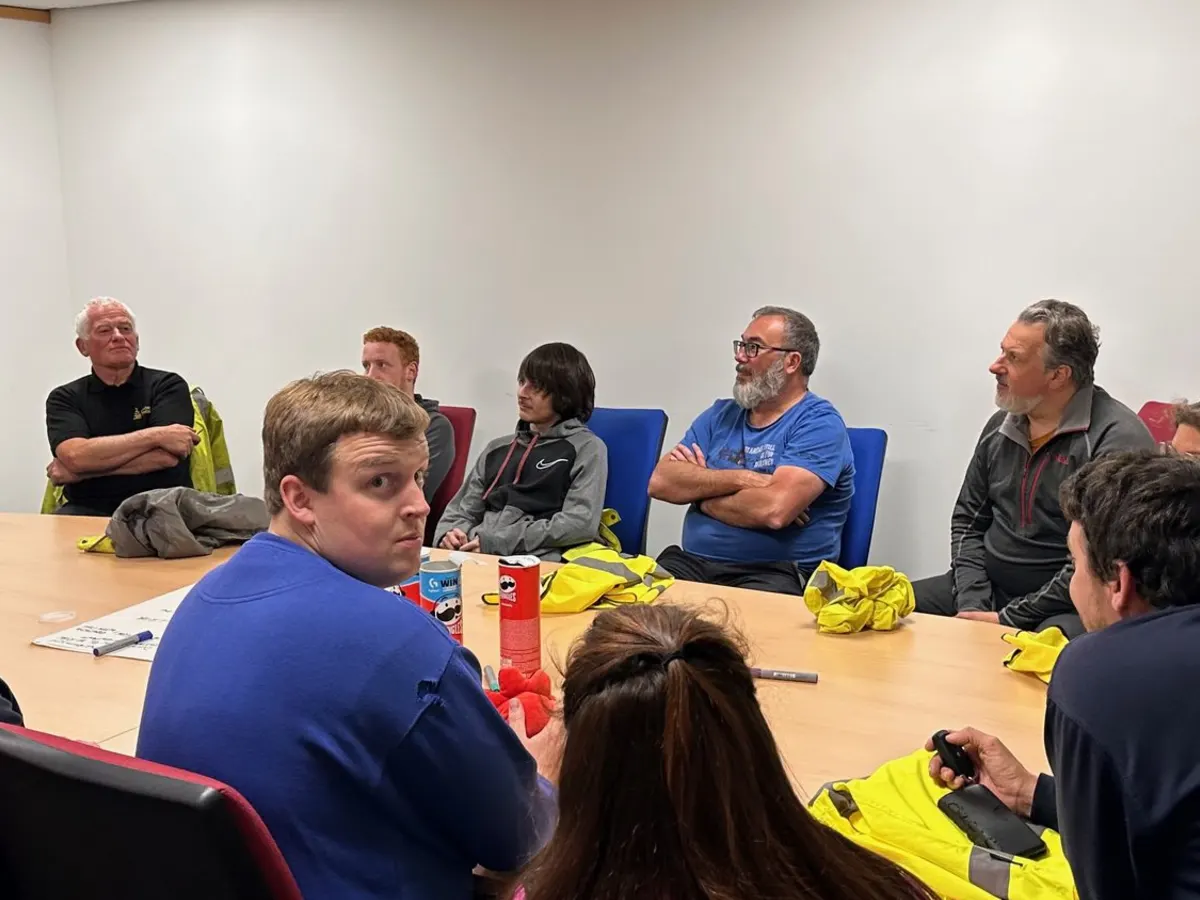
Face-to-face conflict management for front-line staff who deal with the public when things get heated.
Security teams, door and venue staff, and anyone whose role brings them into contact with difficult or aggressive members of the public. It suits organisations that want a consistent, defensible approach to handling conflict across their workforce. The course can also form part of a wider programme on responding to violence at work.
The people teaching powers, evidence and conflict have used them.
Police Crime Prevention Academy endorsement and the NCFE Award: the combination forces and clients ask for.
Three, four or five days shaped to what the chief officer has actually granted your team.
Half-day live sessions, morning, afternoon or evening.
We tailor every programme in a planning call. Ask for the full outline and a quote in one go.
The course is built around a model and strategy that describes the phases of an incident of difficult or aggressive behaviour. Delegates learn the model, apply it to incidents they have already experienced, and then rehearse using it on the kinds of situations they are likely to meet in future.
The result is a safe and empowering method that lets staff take charge of a situation rather than react to it, and ultimately de-escalate the behaviour being displayed. These dealing with people skills are essential for anyone who works for, with or is responsible to others.
Our trainers have delivered conflict resolution training across a wide range of industries, and 95 percent of learners describe our training as fun and informative. Every client has a dedicated course co-ordinator for booking and implementation, and our after-care team follows up to make sure the training has landed.
Thirty-four years with Thames Valley Police and the Metropolitan Police, including twelve in police learning and development as an assessing officer and a spell as a sergeant. Also delivers speed awareness courses.
The name that comes up in review after review.A retired police detective who now delivers our Transport for London CSAS and RSAS programmes.
Her September 2026 TfL cohort passed the exam to a person.Delivered for


The course was well organised and provided useful knowledge and practical skills. The assessors Jackie and Mark were very helpful, professional and supportive throughout the training.
Nick presented the course in a very professional manner using his knowledge and experience to make the information easy to digest and relevant to my role in TFL using real life scenario and practical applications.
RSAS/CSAS training was very informative and good. It was well paced and our Trainer Nick was very knowledgeable. He made it interesting with his experiences in the past that kept us going.
The CSAS/RSAS course is an intensive program which is quite insightful and educative. It was delivered by a superb tutor Nick who made the program quite interactive and easy to assimilate.
Training can take place before vetting completes; employer approval and individual vetting run alongside it.
A three-day traffic-management programme covers those without the full five days.
Refreshers run as half-day live sessions in morning, afternoon and evening slots.
We send the employer guide and the application route with every quote.
There is no single law that names it, but employers have a duty under the Health and Safety at Work etc. Act 1974 and the Management of Health and Safety at Work Regulations 1999 to assess and control the risk of violence and aggression to staff. Conflict resolution training is one of the most common control measures and is expected in sectors such as security, retail, transport and public services.
Not on its own. SIA licence linked qualifications for door supervisors and security guards already include a conflict management unit. This course goes further and is designed for whole teams, including staff who do not need an SIA licence.
Yes. A core part of the course is reflecting on incidents your people have actually experienced and applying the model to them, so the content is grounded in your working environment.
there is no fixed national rule. Many employers refresh every 2 to 3 years, or sooner after a serious incident or a change in role.
Sectors: Security firms and in-house teams · Venues and event organisers · Rail and community safety
Numbers, location and deadline is all we need. Written quote within one working day.
Numbers, location, deadline. If you need other courses in the same visit, say so and we will plan one trip.